
Non-invasive shockwave therapy for joint and tendon pain.
Serving Oak Brook, Elmhurst, Villa Park, Lombard and nearby DuPage County communities.
Medically reviewed by Vincent Walsh, PA-C
Medically Reviewed by Vincent Walsh, PA-C
Pain has a way of changing the little things first. You stop reaching as high with one shoulder, think twice before taking the stairs, shorten a workout, or wake up already anticipating how your back will feel once you get moving. When discomfort keeps returning, managing your day around it can become almost as frustrating as the pain itself.
For pain that keeps coming back or inflammation that makes movement uncomfortable, treatment should be about more than simply getting through the day. Lotus Trim uses acoustic shockwave technology to stimulate the body’s natural healing response, support tissue repair, and improve circulation in targeted areas. SoftWave, also known as SoftWave TRT (Tissue Regeneration Therapy), is a form of extracorporeal shockwave therapy commonly used in sports medicine settings, including with collegiate and professional athletes, for both acute concerns such as ankle sprains, muscle strains, and soft-tissue injuries, as well as chronic conditions that continue to interfere with training or performance.
SoftWave is a non-invasive shockwave therapy that uses acoustic waves to activate the body’s own healing and tissue regeneration processes. The technology delivers acoustic waves into a targeted area of the body, where they interact with tissue and trigger a cellular response associated with healing, circulation, and tissue repair.
Lotus Trim uses SoftWave therapy as an option for clients dealing with pain and inflammation, as well as within pelvic health care and treatment plans focused on sexual health and performance. The technology has FDA 510(k) clearances that include activation of connective tissue, temporary improvement in blood supply, and temporary pain relief. SoftWave also has applications beyond those FDA-cleared indications, so we are careful to discuss what the treatment can realistically be expected to do for your particular concern.
You can think of SoftWave as giving an area that has been struggling to recover a new biological signal. Its electrohydraulic technology creates acoustic shockwaves that travel into the targeted tissue rather than relying on medication, injections, or surgical incisions. SoftWave’s broad-focused applicator distributes energy across both superficial and deeper tissue. Once delivered, this energy can initiate cellular responses involved in connective tissue activation, blood flow, angiogenesis, growth-factor activity, and tissue remodeling. That makes the treatment especially interesting when the goal is not simply to temporarily distract from pain. Depending on the concern being treated, SoftWave may be used to support:
Your treatment is still based on what is causing the problem. Shoulder pain, plantar fascia discomfort, chronic pelvic pain, and an irritated tendon are very different concerns, even though SoftWave technology may have a role in each situation.
Not all shockwave devices work the same way. SoftWave uses electrohydraulic technology with a broad-focused applicator, which distributes acoustic energy across a wider and deeper treatment zone than many other shockwave systems. This is different from radial shockwave therapy (RSWT), which generates mechanical pressure waves using a projectile mechanism and tends to concentrate energy closer to the surface.
Focused shockwave devices, by contrast, deliver energy to a very narrow point. SoftWave’s design falls between these two approaches — it can reach deeper tissue without the pinpoint intensity of a fully focused device, making it a versatile option for a wider range of musculoskeletal and soft-tissue concerns.
The practical difference matters because the type of shockwave technology affects how much tissue it reaches, how deep the energy penetrates, and which conditions it may be suited for. SoftWave’s broad-focused design is one reason the technology appears in both orthopedic and sports medicine settings as well as in emerging pelvic health applications.
Pain can originate in muscles, tendons, joints, and other soft tissues, which is why identifying the area and nature of the problem matters before treatment begins. SoftWave is used across a range of musculoskeletal applications, and Lotus Trim specifically incorporates it for pain and inflammation. Conditions and concerns that may be considered for SoftWave treatment include:
SoftWave’s manufacturer also identifies orthopedic applications involving tendinopathies and other musculoskeletal concerns. Whether the treatment is appropriate depends on the individual condition rather than simply where it hurts.
Lotus Trim also incorporates SoftWave Therapy into pelvic health care when appropriate. Research on shockwave therapy for chronic pelvic pain in men and women continues to develop, and SoftWave is used as one part of a broader pelvic health plan rather than a stand-alone treatment. To learn more, visit our Pelvic Health Therapy page.
The treatment itself is more straightforward than the technology behind it might make it sound. We first identify the area causing discomfort and talk about how the problem affects you. That matters because simply pointing to “my knee” or “my back” does not tell the whole story. Once the treatment area has been identified, the SoftWave applicator is positioned over the targeted tissue and acoustic waves are delivered through the area.
Treatment is non-invasive, meaning there are no surgical incisions. SoftWave reports an average treatment time of about 10 minutes for its technology, although your actual visit and treatment plan can vary according to the area and reason for treatment. During the appointment, we can also use your feedback to help identify sensitive areas. You may feel the acoustic pulses as the applicator moves across the treatment area, particularly over tissue that is already irritated or tender.
One reason people explore shockwave therapy is that they want another option before moving toward more invasive treatment. SoftWave works externally while creating a biological response within the tissue, which gives it a very different role from surgery or medication-based pain management. Potential advantages include:
The important word here is potential. Pain can have many causes, and no responsible treatment should be presented as a guaranteed fix for every person who walks through the door.
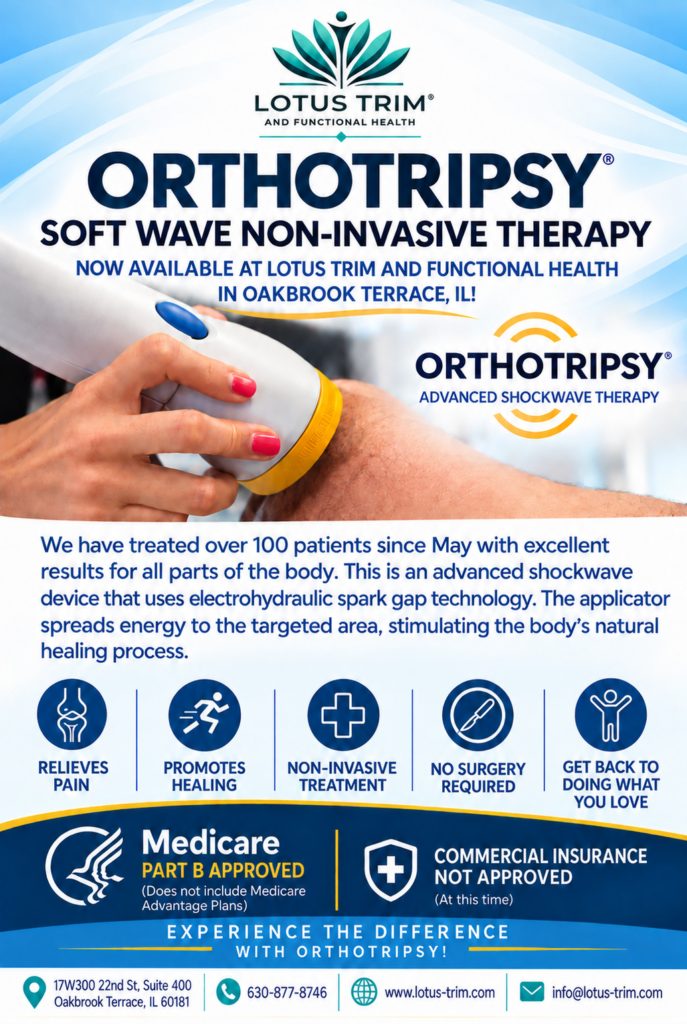
The cost of SoftWave therapy depends on the area being treated, the number of sessions recommended, and your insurance coverage. Our team can provide specific pricing during your evaluation so you know what to expect before beginning treatment.
For Medicare beneficiaries, SoftWave therapy can be billed to Medicare. Orthotripsy is covered under Medicare Part B and any secondary insurance you carry will typically pick up the remaining balance after Medicare pays its portion.
Medicare Part B coverage does not include Medicare Advantage plans, and commercial insurance is not accepted for SoftWave at this time. If you do not have Medicare Part B, our team can walk you through pricing and available financing options during your evaluation.
If you are a Medicare beneficiary interested in SoftWave therapy, contact our team and we can walk you through how coverage works for your specific situation.
SoftWave may be worth discussing when discomfort has become persistent, an old injury continues to interfere with activity, or inflammation keeps returning in the same area. It may also appeal to clients who would prefer to explore a non-invasive approach before considering more involved options. You may want to ask us about SoftWave if pain is limiting your workouts, making normal movement uncomfortable, interfering with work or recreation, or simply making you more aware of your body than you want to be.
Clients with certain pelvic health concerns may also have SoftWave incorporated into their treatment plan. Candidacy cannot be determined from symptoms alone. We need to consider the location being treated, the nature of the concern, your health history, and whether shockwave therapy is appropriate for that tissue.
You probably want to know one thing more than anything else: when will the area actually feel different? SoftWave is designed to stimulate biological processes rather than simply creating a temporary surface sensation, so your experience may continue to evolve after the appointment. Some clients pursue treatment because they want less discomfort, while others are more interested in moving comfortably again or returning to activities they have been avoiding. Improvement and timing can vary depending on the condition, how long it has been present, and individual response. Your plan may involve more than one session. We will base treatment frequency on the concern being addressed rather than promising the same schedule or result to everyone.
When discomfort starts influencing how far you walk, how you exercise, how comfortably you sit, or which activities you avoid altogether, getting through the day can require far more thought than it should. Exploring treatment is not only about chasing a lower pain score. It can be about getting some of that freedom back.
Lotus Trim offers SoftWave therapy in Oakbrook Terrace, IL for clients dealing with pain, inflammation, musculoskeletal concerns, and certain pelvic health needs. Contact our team to schedule an evaluation, show us exactly what has been bothering you, and find out whether SoftWave belongs in your treatment plan.
SoftWave TRT stands for SoftWave Tissue Regeneration Therapy. It refers to the same SoftWave technology used at Lotus Trim. The “TRT” name reflects the treatment’s focus on supporting the body’s natural tissue regeneration and repair processes through acoustic shockwave energy.
SoftWave is a type of extracorporeal shockwave therapy. It uses electrohydraulic technology to generate acoustic shockwaves and a broad-focused applicator designed to distribute energy through a wider treatment zone. Not every device marketed using “wave” terminology produces the same type of energy, so it is useful to know exactly which technology is being used.
You can feel the acoustic pulses during treatment, and an already sensitive area may be more noticeable as it is treated. Comfort varies by person, location, and condition. We communicate with you throughout the session rather than expecting you to silently tolerate an uncomfortable experience.
SoftWave describes average treatments with its technology as approximately 10 minutes, although your complete appointment may take longer because we also need time to discuss symptoms and evaluate the treatment area. Your actual treatment time can depend on the concern and area being addressed.
SoftWave has applications involving musculoskeletal pain and soft-tissue concerns, including plantar fasciitis, tendon problems, shoulder conditions, and other areas of chronic discomfort. Lotus Trim uses the technology for pain and inflammation and can also incorporate it into pelvic health care. The best way to determine whether your specific concern fits is to have it evaluated rather than assuming all pain responds the same way.
There is no single number that makes sense for every client. A long-standing tendon problem and a pelvic health concern are not identical treatment situations. We consider what is being treated, how you respond, and your goals before recommending a schedule.
SoftWave is used by Lotus Trim for pain and inflammation. The biological response associated with shockwave therapy includes processes related to tissue healing, circulation, and inflammatory signaling. The reason for your inflammation still matters, so persistent swelling or pain should be appropriately evaluated rather than assuming SoftWave is automatically the answer.
SoftWave can be incorporated into pelvic health treatment, and shockwave therapy has been studied for chronic pelvic pain conditions in both men and women. Research has reported promising reductions in pain and pelvic floor symptoms, but pelvic pain can have multiple causes and often benefits from a broader, individualized approach.
SoftWave is non-invasive and does not create the surgical recovery period associated with an incision-based procedure. Your experience afterward can still depend on the area treated and your individual response. We will explain what activities make sense following your session based on the treatment you receive.
SoftWave has FDA-cleared applications including temporary pain relief, temporary improvement in blood supply, and connective tissue activation. Like any therapeutic technology, however, it has contraindications and requires appropriate screening and application. That is why we review relevant health information before deciding whether treatment is suitable.
Yes. SoftWave is covered under Medicare Part B, with secondary insurance typically covering the remaining balance. Medicare Part B coverage does not include Medicare Advantage plans, and commercial insurance is not accepted for SoftWave at this time.
Start with what the pain is stopping you from doing. Maybe walking has become uncomfortable, your shoulder limits workouts, your back changes how you move through the workday, or pelvic discomfort is affecting your quality of life. Once we understand the problem, we can evaluate whether SoftWave therapy fits your needs instead of making you choose a treatment based solely on its name.
The cost of SoftWave therapy varies depending on the treatment area, the number of sessions in your plan, and your insurance coverage. Medicare Part B covers SoftWave, and secondary insurance typically picks up the remaining balance. Medicare Advantage plans and commercial insurance are not accepted for SoftWave at this time, so for patients without Medicare Part B, our team can discuss pricing and available financing options during your evaluation.
SoftWave’s FDA 510(k) clearances cover temporary pain relief, temporary improvement in blood supply, and activation of connective tissue. Research on extracorporeal shockwave therapy continues to expand across musculoskeletal and pelvic health applications. Results depend on the condition being treated, how long it has been present, and individual factors. We evaluate each client’s situation rather than promising the same outcome to everyone.